
Head-to-head comparison
HelpDesk vs Zendesk
Compare HelpDesk and Zendesk for small support teams, including pricing, channels, automation, reporting, AI and likely upgrade costs.
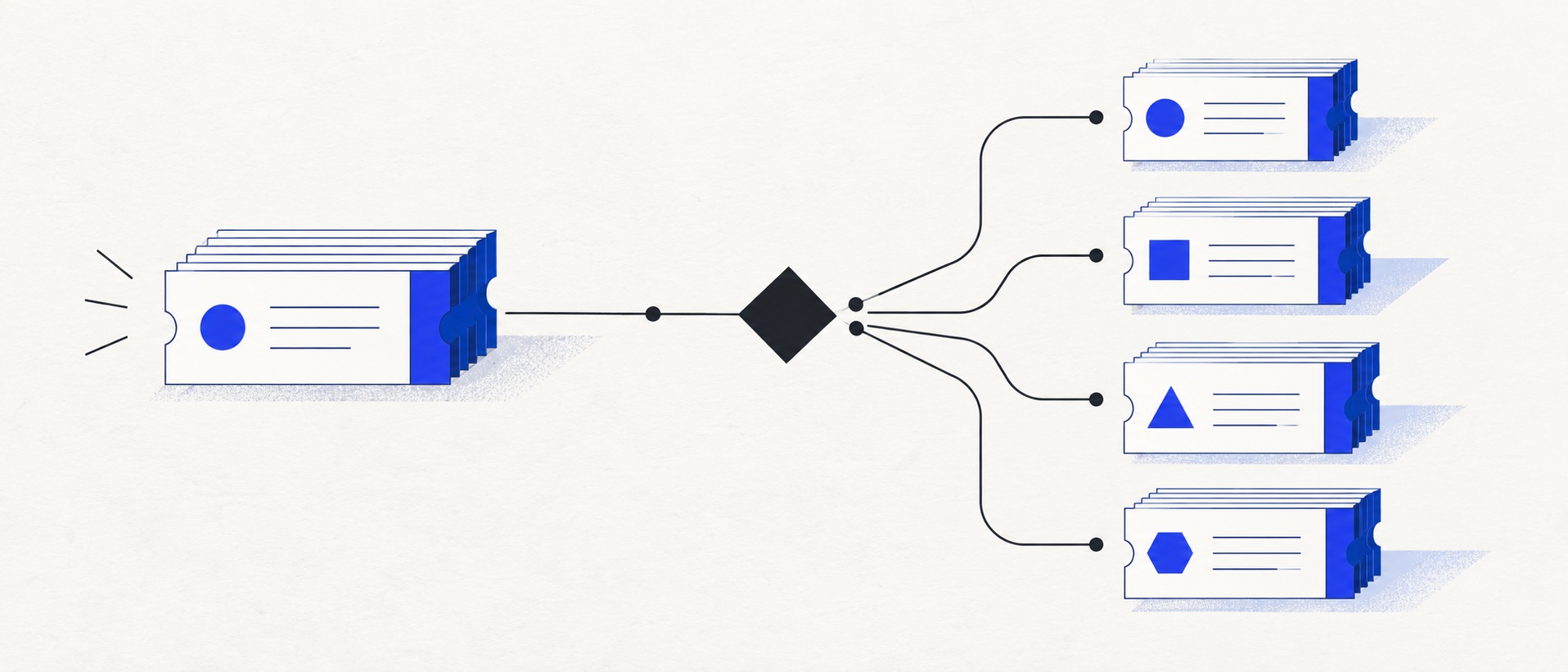
Compare HelpDesk Essential with the Zendesk package that actually contains your required channels, not simply the lowest advertised seat price.
HelpDesk reduces administrative weight; Zendesk offers more headroom for mature routing, knowledge and reporting.
Model users, AI usage, add-ons and the first likely upgrade over twelve months.
Product shortlist
HelpDesk and Zendesk side by side
Compare a focused queue with a wider service platform using the plan that contains your workflow.

HelpDesk
Best for: Small teams that want ticketing, website chat and useful automation without an enterprise platform
A focused support workspace combining ticketing, a shared inbox, website chat, messaging channels, automation and reporting in one entry plan.
$19 per user/monthEssential, billed annually; checked September 2026
Useful strengths
- Ticketing, website chat and messaging channels on Essential
- 14-day trial without a credit card
Watch for
- There is no permanent free plan
- Extra AI resolutions can add usage cost
- 14-day trial
- Email, chat and messaging
- Per-user pricing

Zendesk
Best for: Teams that expect multiple channels, mature routing and increasing operational complexity
The Support Team plan supplies core email ticketing, routing, analytics and automations. The broader Suite adds live chat, messaging, telephony and a knowledge base.
£15 per agent/monthSupport Team, paid yearly; checked September 2026
Useful strengths
- GBP pricing and a clear entry ticketing plan
- Strong upgrade path for multichannel operations
Watch for
- Suite Team rises to £45 per agent/month
- Small teams may buy more process than they need
- 14-day trial
- GBP pricing available
- Per-agent pricing
HelpDesk and Zendesk can both replace an improvised support mailbox, but they represent different levels of operational ambition. HelpDesk packages shared-inbox ticketing, website chat and lightweight automation into a relatively contained product. Zendesk ranges from email ticketing to a much broader service suite with messaging, help-centre, routing and reporting capabilities.
For most small teams, the decision is not “which product has more features?” Zendesk does. The useful question is whether those additional capabilities solve a current or credible near-term problem. If they do not, HelpDesk's narrower shape can be an advantage rather than a compromise.
Quick comparison
| Area | HelpDesk | Zendesk |
|---|---|---|
| Entry reference | Essential: $19/user/month annually | Support Team: £15/agent/month annually |
| Broader suite reference | Focused ticketing and website chat | Suite Team: £45/agent/month annually |
| Best fit | Small email-and-chat queues | Structured multichannel service |
| Primary cost risk | Higher tier and additional AI usage | Suite tier, add-ons and seat growth |
| Free route | 14-day trial | Trial rather than permanent free plan |
The currencies are different and tax may apply, so do not compare the figures by eye. Price the exact configuration in one currency and include every active agent, required channel and add-on.
Ticket ownership and everyday work
Both products turn incoming messages into trackable tickets. Agents can see ownership, status and history, collaborate privately and use prepared replies. Either is a meaningful improvement when a shared address produces duplicate responses, missed messages or unclear handovers.
HelpDesk keeps the everyday model direct. Its value is easiest to see in a team that wants one queue, a few groups, standard replies and visible responsibility without a lengthy implementation. The smaller surface area can make training and governance easier.
Zendesk supports the same fundamentals but leaves more room for forms, views, roles, service policies and specialised workflows. That helps when different products, customer tiers or support groups genuinely require different treatment. It also means someone must own the configuration. Zendesk wins for operational depth; HelpDesk wins when simplicity is part of the requirement.
Channels and customer experience
HelpDesk Essential combines ticketing with website chat and lists messaging capabilities that suit a compact operation. A team can cover the common journey from an email or live website question into an owned ticket without selecting a large platform.
Zendesk's suite proposition is better aligned with organisations that expect messaging, help-centre and potentially voice workflows to sit within one service architecture. Check the plan and any usage-based elements for each channel. The low-priced Support Team reference should not be treated as equivalent to Suite Team when the buyer needs that broader experience.
Channel count is not a quality measure. During a trial, test identity matching, after-hours behaviour, conversation-to-ticket handover and the customer's view of replies. Choose HelpDesk if two or three well-run channels are enough. Choose Zendesk if coordinated multichannel service is a real operating model rather than a future aspiration.
Automation and AI
HelpDesk Essential includes automated assignment and three ticketing rules. Three rules may be enough for a single queue, but billing, priority, product area and customer tier can quickly consume the allowance. Write the desired rules before the trial and count them honestly.
HelpDesk also includes a limited number of AI resolutions, with additional usage affecting cost. Treat that allowance separately from normal automation. Measure accepted resolutions, reopened conversations and cost per useful outcome instead of assuming every automated closure saves an agent interaction.
Zendesk provides a deeper automation path and markets AI capabilities across its service platform. Exact availability can depend on plan and add-on. Its advantage is the ability to support more sophisticated routing and service design; its risk is paying for complexity before the team has clean categories, ownership and knowledge content. In either product, begin with transparent deterministic rules and add AI where the result can be audited.
Knowledge base and self-service
Zendesk is the clearer choice for a connected help centre. It is designed for an organisation that wants assisted support and maintained self-service to reinforce each other. That becomes valuable when ticket volume contains repeatable questions and an owner is accountable for article quality.
HelpDesk is more convincing as a focused agent workspace. A company can pair it with separate documentation, but that is not the same as choosing an integrated service and knowledge platform. If public articles, article suggestions, search reporting and content governance are selection criteria, test Zendesk at the precise plan level that provides them.
No knowledge base creates value by existing. Review failed searches, link articles in real replies and assign review dates internally. A smaller team that will not maintain content should not buy Zendesk only for an impressive self-service checklist.
Reporting and service control
HelpDesk provides reporting for monitoring a focused operation. Ask whether it answers the decisions the owner makes each week: which queue is building, how quickly customers receive a first reply, what is reopened and where workload sits.
Zendesk offers a stronger route into custom reporting, service targets and management across a larger operation. The capability is useful when managers need consistent definitions across teams and products. Confirm business-hours treatment, exclusions, export access and dashboard availability before relying on a sales demonstration.
Zendesk wins if reporting must become part of formal service governance. HelpDesk remains credible when the team needs a small set of understandable measures and does not want a reporting project.
The real cost over twelve months
At five users, HelpDesk Essential is $95 each month on annual billing before tax. Zendesk Support Team is £75 at five agents, while Suite Team is £225. These are planning references, not a direct currency comparison. Add annual commitment, implementation time, AI or automation extras, channel requirements and the first likely upgrade.
HelpDesk's risk is a sharp step if a needed capability sits above Essential. Zendesk's risk is configuration and suite expansion: the organisation may start with a defensible package and accumulate add-ons or higher-tier requirements as its process develops.
Build three scenarios covering the current team, the next two hires and one operational change. Cost the same workflow in both products. A plan that omits an essential channel, knowledge base or reporting feature is not the cheaper plan.
Which should you choose?
Choose HelpDesk when support is mainly email and website chat, a handful of rules covers routing, and the team values a clean, quickly administered queue. It is particularly sensible when the owner of support also has another role.
Choose Zendesk when the business needs a connected help centre, broader channels, formal service policies or reporting across a growing operation. Its additional cost and administration are justified when the team will actively use the depth.
Also consider Freshdesk for broad ticketing with a lower-cost entry path, Zoho Desk for value and free entry, HubSpot Service Hub when CRM context is decisive, and Gorgias for ecommerce-native workflows.
A fair trial plan
Connect the same low-risk inbox to each trial and use ten representative enquiries. Test assignment, a private note, a reopened ticket, one urgent route, a website-chat handover and a weekly report. In Zendesk, build one useful help-centre article and confirm the plan that supports it. In HelpDesk, implement every proposed rule and monitor the AI allowance.
Invite an agent who did not configure the system. Ask that person to find the next item, understand history, escalate it and identify what needs attention. Record setup and administration time as well as agent clicks.
Final verdict
HelpDesk is the better fit for a small team seeking accountable email-and-chat support without platform overhead. Zendesk is the better long-term service platform when channels, self-service, routing and reporting will be managed as a mature operation.
The disciplined choice is to buy the smaller system that covers the next twelve months, not the larger logo with the longest feature list. Select Zendesk for capabilities you can name and test; select HelpDesk when focus is the capability the team needs most.
Sources
All plan facts come from provider sources. Product-fit conclusions are Support Sorted's editorial judgement.
Frequently asked questions
Questions readers ask before choosing
Is HelpDesk cheaper than Zendesk?
HelpDesk Essential is advertised at $19 per user each month on annual billing. Zendesk Support Team starts at £15 per agent each month annually, but its broader Suite Team package is £45. The cheaper option depends on the channels and service features required, not currency-converted headlines alone.
Which is easier for a small team?
HelpDesk is usually the more contained choice for a small email-and-chat operation. Zendesk offers more depth and configuration, which is valuable for a growing service function but can create unnecessary administration for a simple queue.
Which has the better knowledge base?
Zendesk is the stronger choice when a connected help centre and mature self-service programme are firm requirements. HelpDesk should be selected primarily for focused assisted support rather than as a broad knowledge platform.
Which is better for omnichannel support?
Zendesk has the clearer path for organisations coordinating email, messaging, voice and self-service at scale. HelpDesk is more appropriate when email, website chat and a compact messaging requirement cover the real workload.